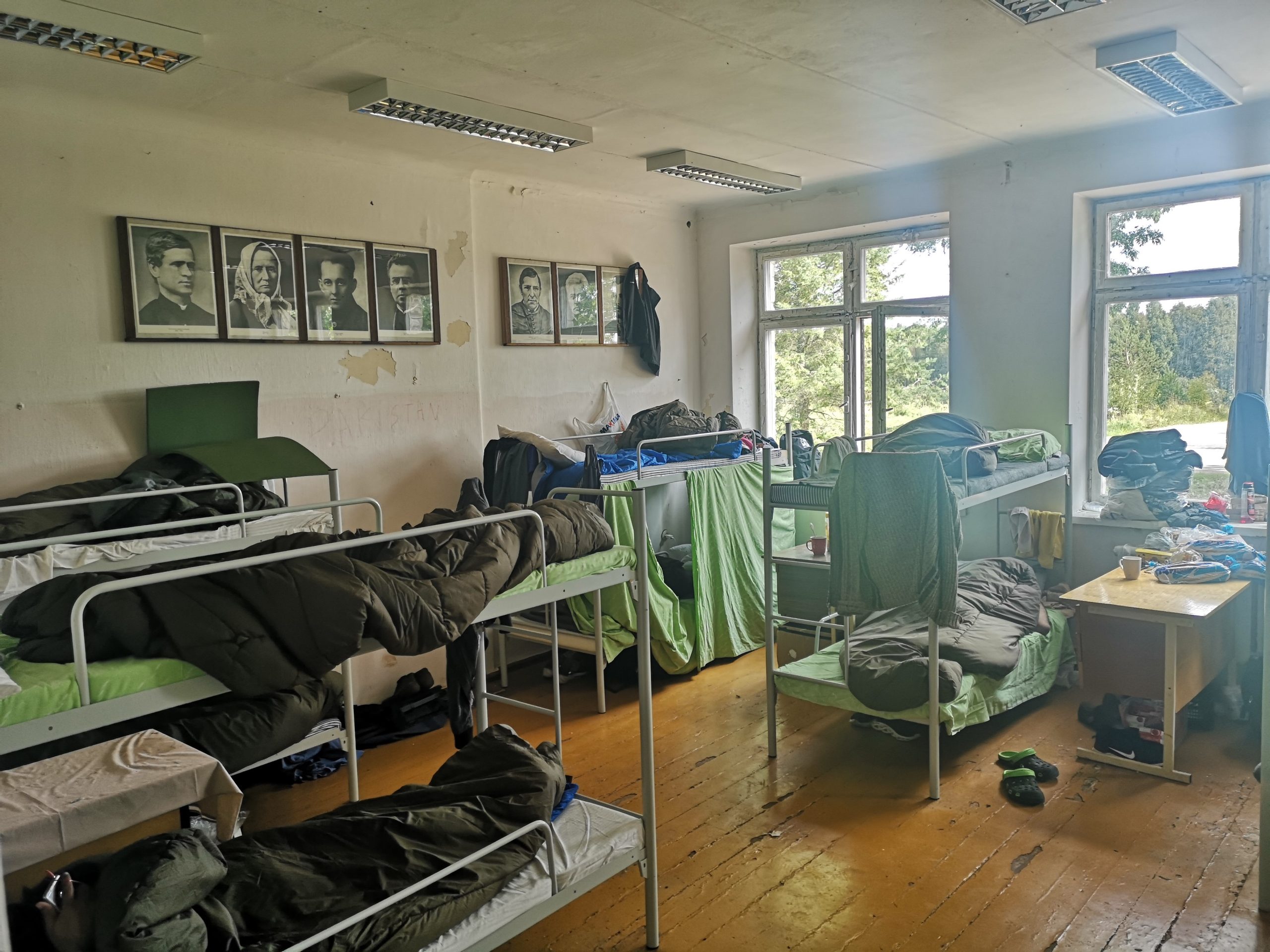
Monitoring Human Rights in Mental Health Care Institutions: The Report
The overall goal of the project was to contribute to democratic empowering of individuals detained in mental health care institutions by ensuring respect for their human dignity and observation of their human rights.
The project is the first of its kind, implemented by a nationwide NGO coalition. In promoting institutional compliance with international human rights standards, prevention of human rights violations, and improved human conditions, the NGO coalition (team of mental health care experts and lawyers) carries out the following activities:
- Analysis of existing normative framework, organizational structure and budgeting of mental health care institutions;
- On–site visits to all psychiatric hospitals and social care homes for mentally disabled – 14 institutions altogether - to gather information on human conditions, quality of services and human rights violations;
- Publication and dissemination of a report on human condition and human rights in mental health care institutions;
- Follow-up activities geared toward stimulation of dialogue on recommended policy enhancements;
- Strategic litigation, where appropriate.
Project partners:
Human Rights Monitoring Institute (HRMI)
Vilnius Center for Psychological and Social Rehabilitation (CPSR)
Global Initiative on Psychiatry (formerly known as Geneva Initiative on Psychiatry)
Lithuanian Welfare Society for Persons with Mental Disability “Viltis ”
A comprehensive report identifying problematic areas and violations of human rights with specific recommendations for improvement is due in April-May 2005. The research and publication phase will be followed by implementation of a public campaign and advocacy strategy that aims:
· To raise awareness of human rights standards for mental health care institutions;
· to reduce the stigma of accepting mental treatment;
· to inform mental health professionals, government officials, users of mental health services, their advocates, relatives of the mentally ill, the general public, media, and international community of actual conditions and problems related to the effective enjoyment of human rights by individuals placed in these institutions.
The strategy targets key decision-makers and aims to generate public dialogue and build support for necessary improvements in policy, legislation and practice. It is hoped that by building on public dialogue through informal fora, reinforced through aggressively maintained media advocacy, the coalition can contribute to critical mass necessary for making relevant institutions and officials to act upon report’s findings and recommendations.
Strategic litigation is considered as a possible follow-up to the monitoring exercise. The idea is intended as a flexible instrument of change that may be used when research findings present an opportunity for making an impact on problematic areas through litigation.
Coalition partners consider the project as a baseline for other activities – information and materials generated by the project will be used in their established programs and serve to develop new projects.
Presentation of Project Report
Monitoring report was presented to media and society on May 24, 2005 at press conference at BNS (Baltic News Service). See full report here.
The project Human Rights Monitoring in Closed Mental Health Care Facilities is the extension of the international project Monitoring Human Rights in Closed Institutions in the Baltic Countries. The first stage of the project included the monitoring of the following facilities: Mental Health Care Centre of Vilnius City, Republican Vilnius Mental Hospital, Žiegždriai Mental Hospital, Švėkšna Mental Hospital, Prūdiškės Psychoneurological Care Home and Jurdaičiai Psychoneurological Care Home. The following institutions took part in the study: Geneva Initiative on Psychiatry, Vilnius University, Estonian Patients’ Rights Protection Organisation, and Mental Disability Advocacy Centre (Budapest, Hungary).
The national monitoring in the second stage covered the investigation in the following mental health care facilities: Kaunas Mental Hospital, Klaipėda Mental Hospital, Šiauliai Mental Hospital, Šaukėnai Mental Hospital, Rokiškis Mental Hospital, Šilutė Care Home, Didvyžiai Care Home, Aknysta Care Home, Linkuva Care Home, Aukštelkė Care Home, Jasiuliškiai Care Home, Dūseikiai Care Home, Strėvininkai Care Home and Skėmai Care Home. The investigation was conducted in nine psychoneurological Care homes in total housing over 50% of all inmates of Lithuanian Care Homes (over three thousand); and five Mental Hospitals scattered throughout all regions of Lithuania.
Main findings include:
Summary of findings:
The development of the mental health care system in Lithuania does not receive adequate attention from the Government. Therefore, the outdated concept of institutional role, functions and operation methods prevails in the country. The reluctance to reform large in-patient treatment facilities by replacing them with a more flexible system of service within the community only confirms the fact. The traditional in-patient facilities cannot safeguard the implementation of mental patients’ rights effectively since they were established following the principle of secluding “defective” individuals. Mere improvement of the facade of the ineffective system and ineffective utilization of the abundant state funds fail to improve the rates of public mental health that remain poor, while the results of treatment, rehabilitation and integration of the mentally ill into the community prove to be feeble.
© 2013 Human Rights Monitoring Institute